

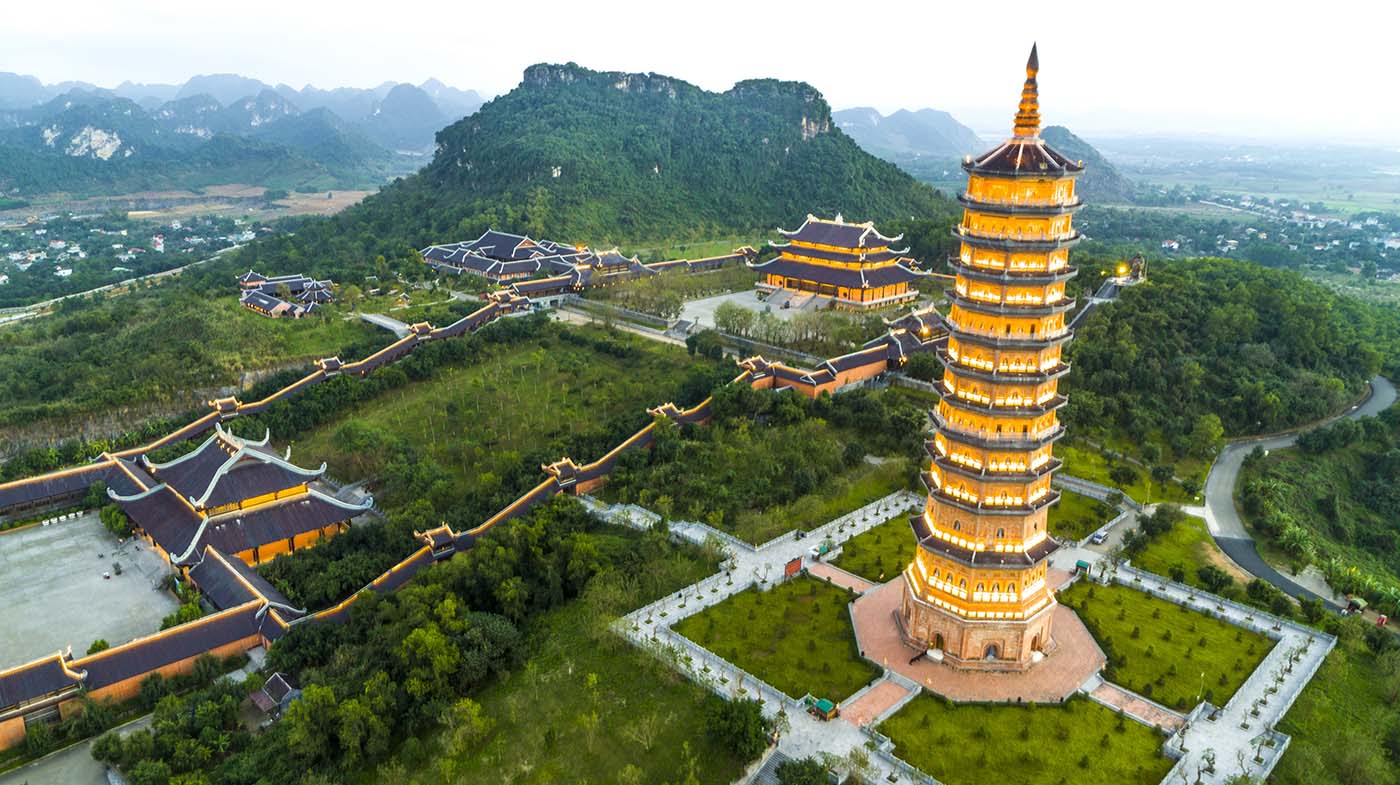
Discovering Bai Dinh Pagoda: A Spiritual Journey Through Time
Introduction: Why Visit Bai Dinh Pagoda?
Bai Dinh Pagoda is more than a tourist attraction; it’s a profound spiritual and cultural journey. As Vietnam’s largest Buddhist complex, it boasts awe-inspiring architecture, record-breaking statues, and centuries of history. Visitors can immerse themselves in its serene ambiance while exploring its vast grounds, making it a must-visit destination in Ninh Binh.
A Day at Bai Dinh Pagoda: What to Expect
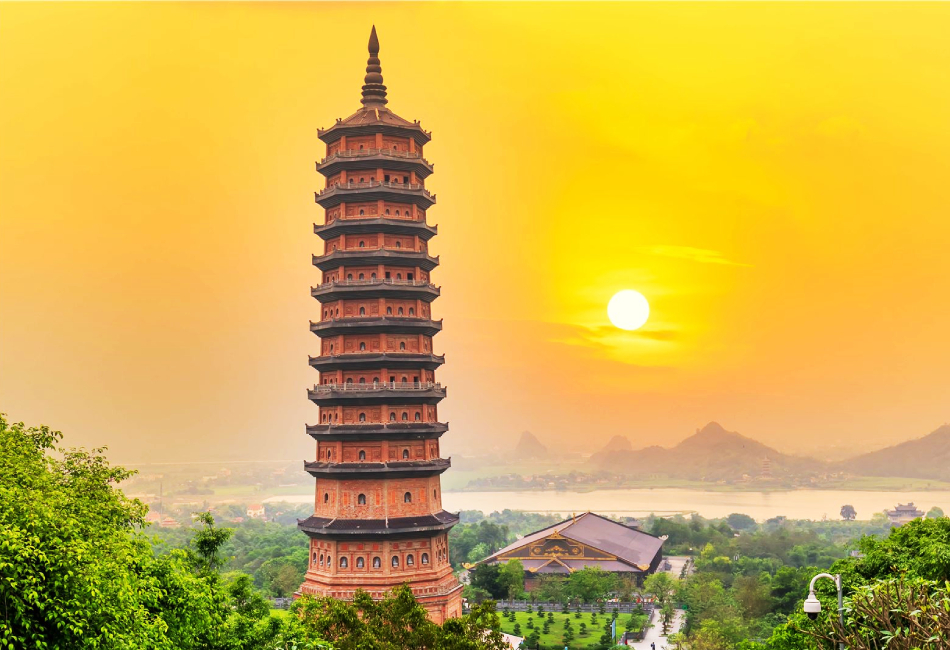
A visit to Bai Dinh Pagoda unfolds like a spiritual odyssey, offering moments of peace and inspiration throughout the day. In the morning, visitors can arrive early to enjoy the tranquil atmosphere and avoid the crowds, beginning their journey at the majestic Tam Quan Gate. As the day progresses, the afternoon presents opportunities to explore the Bell Tower, where the soothing chime of the giant bronze bell fills the air, and to stroll through the Arhat Corridor, marveling at the individuality of the 500 intricately crafted statues. As evening approaches, a visit to the Stupa provides a serene and awe-inspiring conclusion to the day, with the sunset casting golden hues over the sprawling complex, leaving a lasting impression of spiritual and architectural grandeur.
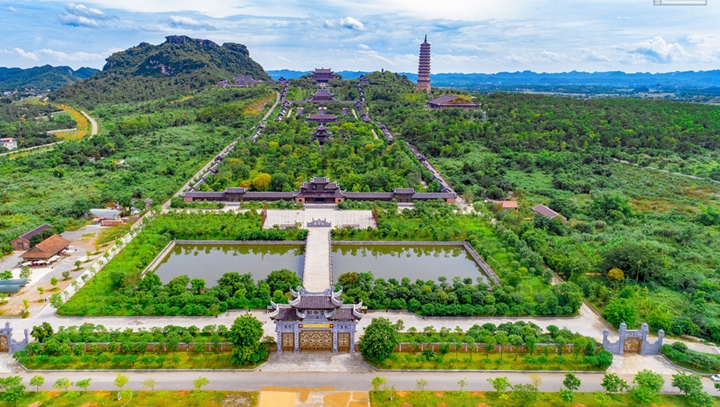
History Comes Alive: The Story of Bai Dinh
Ancient Roots
The history of Bai Dinh Pagoda stretches back over a thousand years, beginning in the 10th century during the reign of the Dinh Dynasty. The original site was established by the revered monk Nguyen Minh Khong, who chose the location on Bai Dinh Mountain for its serene and sacred atmosphere. It served as a sanctuary for monks, a center for Buddhist teachings, and a retreat for spiritual reflection.
Key Highlights:
- Dinh Dynasty Legacy: Bai Dinh was instrumental in promoting Buddhism as a unifying cultural force during the early years of Vietnam’s independence.
- Legend of the Sacred Well: The mountain features a well believed to have healing properties, which was used for medicinal purposes by monks.
Through Dynasties
The Ly and Tran Dynasties (11th to 14th centuries) marked a golden era for Bai Dinh Pagoda, with significant expansions and renovations. The rulers of these periods emphasized the importance of Buddhism as a state religion and contributed resources to enhance the pagoda’s spiritual and architectural prominence.
Developments:
- Ly Dynasty Contributions: New temples and shrines were constructed, showcasing intricate Vietnamese architectural styles.
- Tran Dynasty Renovations: The pagoda became a center for major Buddhist ceremonies, attracting pilgrims from across the region.
- Cultural Symbol: Bai Dinh symbolized harmony between spiritual and natural elements, reflecting the Buddhist philosophy of balance.
Modern Revival
The most transformative period in Bai Dinh’s history began in 2003 when a large-scale restoration and expansion project was launched. Spearheaded by the Vietnamese government and Buddhist organizations, this ambitious endeavor aimed to preserve its historical essence while creating a modern spiritual complex that could accommodate millions of visitors annually.
Milestones:
- Reconstruction of the Worship Halls: Traditional designs were meticulously followed to restore the grandeur of the ancient structures.
- Introduction of New Landmarks: The Tam Quan Gate, Bell Tower, and Arhat Corridor were added, blending tradition with modernity.
- Eco-Friendly Features: Electric car services and landscaped gardens were introduced to ensure a sustainable visitor experience.
The Ly and Tran Dynasties contributed to the expansion and significance of the pagoda, adding monumental structures and enhancing its spiritual role.
Modern Revival
A large-scale restoration project began in 2003, blending traditional designs with modern features, ensuring Bai Dinh’s place as a spiritual and cultural landmark.
Architectural Marvels of Bai Dinh Pagoda
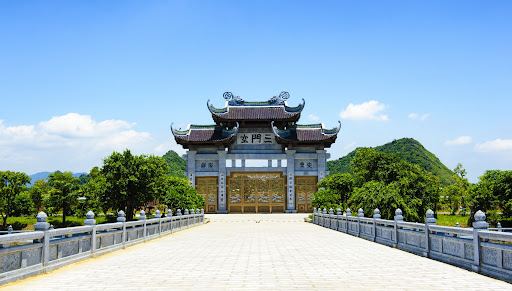
The Grand Entrance: Tam Quan Gate
Symbolizing the passage from the material world to spiritual enlightenment, this gate is an architectural masterpiece with intricate carvings and towering columns.
The Soaring Bell Tower
Housing a 36-ton bronze bell, the Bell Tower embodies serenity and grandeur, resonating deeply with visitors.
Serenity in the Worship Halls
The worship halls are a testament to Vietnamese craftsmanship, featuring elaborate altars, statues, and murals.
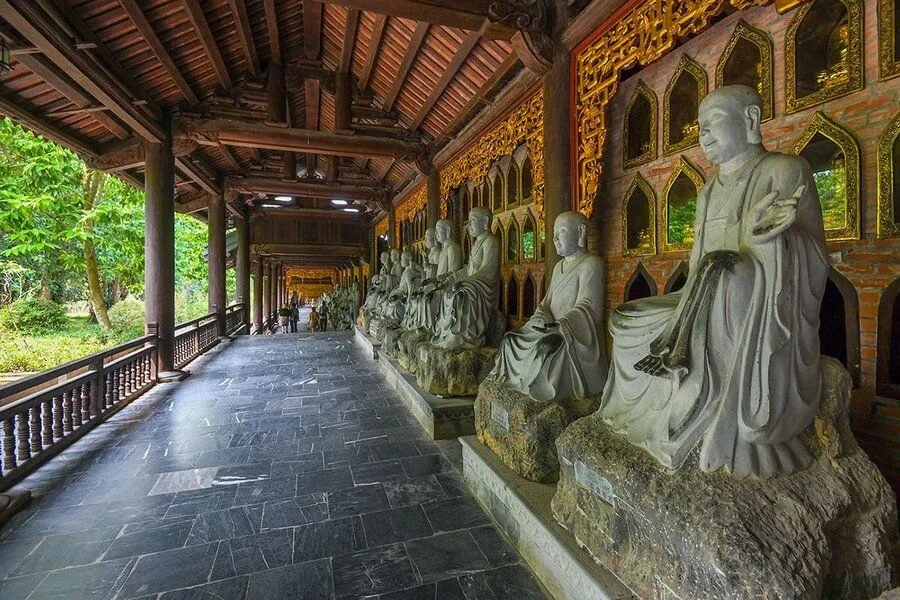
Walking Among Arhats: The Corridor of 500 Statues
Each statue in the Arhat Corridor is uniquely crafted, representing different expressions and postures.
The Majestic Stupa
Standing tall, the stupa houses sacred relics and offers panoramic views of the surrounding landscapes.
Behind the Scenes: Festivals and Religious Practices
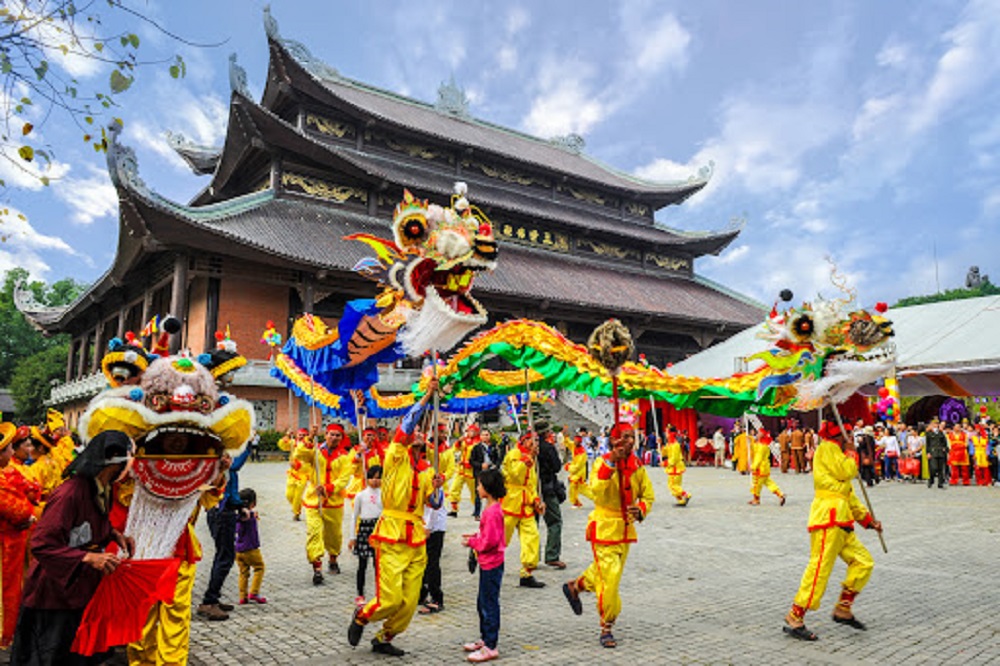
Bai Dinh Pagoda is a hub of vibrant cultural and spiritual activity. One of its most celebrated events is the Bai Dinh Pagoda Festival, held annually during the Lunar New Year. This festival is a spectacle of traditional rituals, music, and cultural performances, drawing pilgrims and visitors from across Vietnam. The festival's highlights include ceremonial offerings, Buddhist chants, and festive parades that bring the complex to life.
Beyond the annual festival, daily rituals and ceremonies are a cornerstone of Bai Dinh’s spiritual ambiance. Monks and pilgrims engage in prayers and meditations throughout the day, creating a serene and reflective environment. These practices are often accompanied by the resonant chime of the bronze bell in the Bell Tower, adding to the pagoda’s tranquil atmosphere.
Practical Guide: Visiting Bai Dinh Pagoda
How to Get There
- From Hanoi: Approximately 2 hours by car or bus.
- By Motorbike: A scenic route through rural Vietnam.
Best Time to Visit
- Spring: During the Lunar New Year festival for vibrant celebrations.
- Autumn: For cooler weather and fewer crowds.
Entrance Fees and Facilities
| Feature | Price (VND) | Notes |
|---|---|---|
| Entry Ticket | 60,000 | Includes main attractions. |
| Electric Car Service | 30,000 | Convenient for longer walks. |
Beyond Bai Dinh: Exploring Nearby Attractions
- Trang An Landscape Complex: A UNESCO World Heritage site with stunning boat tours.
- Hoa Lu Ancient Capital: Discover Vietnam’s first imperial city.
- Tam Coc – Bich Dong: Known for its scenic boat rides and caves.
A Pilgrim’s Reflection: Why Bai Dinh is More Than a Tourist Destination
Bai Dinh Pagoda offers more than architectural splendor; it provides a profound space for reflection, spiritual growth, and cultural immersion. The sprawling complex, with its serene pathways and sacred statues, invites visitors to pause and connect with their inner selves. The gentle ringing of the bronze bell and the tranquil surroundings create an atmosphere that encourages mindfulness and introspection. For many, walking through the Arhat Corridor or meditating under the sacred Bodhi trees becomes a transformative experience.
Beyond its spiritual allure, Bai Dinh is a testament to Vietnam’s rich heritage, blending ancient traditions with contemporary efforts to preserve and celebrate its cultural identity. Visitors often leave with a sense of peace, a deeper connection to Buddhist philosophy, and an appreciation for the enduring legacy of faith and artistry that defines the pagoda. It is more than a destination; it is a journey into the soul of Vietnam.
FAQs: Everything You Need to Know Before Visiting
- What should I wear when visiting? Modest attire is required, covering shoulders and knees.
- Are there guided tours available? Yes, many operators offer detailed tours.
- Can children participate in rituals? Children are welcome but should maintain decorum.
Inspired to see it for yourself?
Explore our journeys →